
Showing posts with label society. Show all posts

Thursday, May 21, 2015

Causes of Bacon’s Rebellion and its Various Interpretations by Tajae Pryce


            The moment in American history that has now become known as Bacon’s Rebellion in 1676 offers insight into the psyche of a collective social consciousness of 17th century settlers in the Virginia colony. This is achieved not only through actual events that occurred during this time period recorded through primary sources, but also how these events were interpreted, throughout all levels of society, creating differing narratives that place emphasis on the incident’s varying causes, implications and nuances. A complete exploration of the Virginia colony’s social, political and economical atmosphere in the years leading up to Bacon’s Rebellion is necessary for historians to conduct and record true surveys that can be referenced and learned from as time progresses. As James D. Rice suggests in Tales from a Revolution, Bacon’s Rebellion should not be understood as a sensational uprising from a rouge group settlers led by one man, fighting for change, but rather a pre-Revolutionary example of resiliency and retaliation from a group of people who believed that their unfavorable conditions were so overwhelmingly oppressive that a need for rising against it by any means possible was necessary for the betterment of themselves and the future inhabitants of the colony. Rice challenges mainstream history’s focus on Bacon and instead uses him as a composite representative of a revolutionary-driven colonist faced with challenges that encompassed all areas of society, social, political and economic.
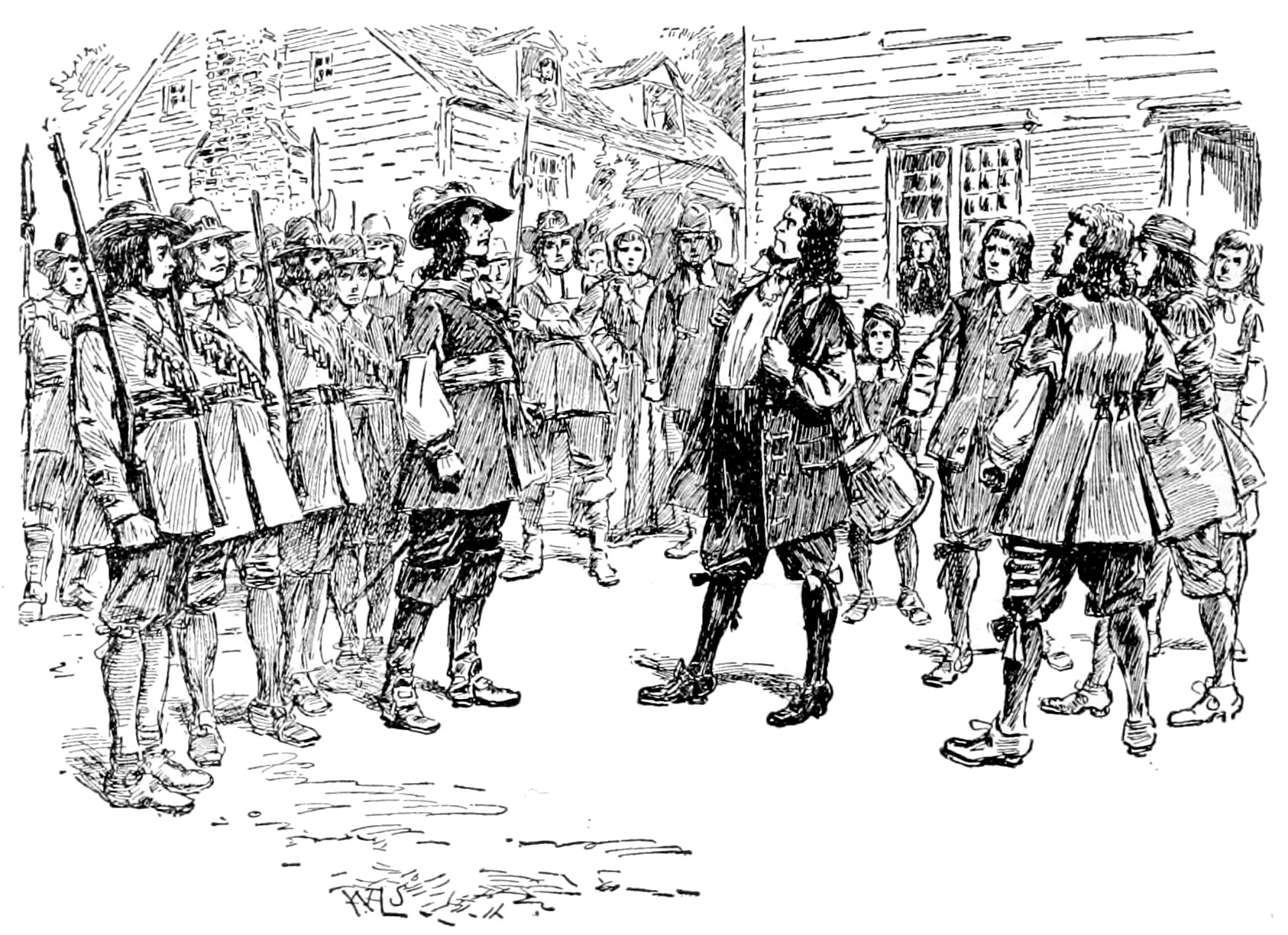
            Late 17th century Virginia was the New World’s southern hub for trade and the accumulation of revenue and resources for the Crown. However, the colony was inhabited both by European settlers as well as displaced native peoples of various tribes responding in different ways to the presence of the Europeans and how they would affect the survival of the native’s people and natural resources. The Europeans traded with the Indians and, at times lived in close proximity with them. Conflict would arise, however, because of the absence of an effective system serving to protect the integrity of these interactions often leading to whatever arty who was wronged taken justice into its own hands and creating further tension. Rice gives an example of this type of conflict with Thomas Matthew. Matthew, a planter at Cherry Point had some of his livestock taken from him by Doeg Indians as a response to him cheating them out of what was owed for a transaction (Rice, 5). This heist led to retaliation by Matthew and some of his fellow Englishmen going after and attacking the Doegs. Evidence of such vigilance against the natives as well as the overall clash between the two cultures shows how much of an impact it had on the eventual uprising in Virginia. Natives and Europeans attacked and pillaged from one another under no effective structure of the government.  The settlers felt that this hands-off approach from their government regarding attacks by natives was highly unjustified and corrupt. In addition to the settlers’ distrust in their government’s lack of protection, Governor William Berkeley’ identification of any type of militia formed against the natives as mutinous rebels create an irreparable rift between the working class and their governing body (44). The increase in the amount of attacks and the governor’s failure to address the issue effectively in the way the settlers wanted was a root cause in the uprising. Fear of the natives and the social rhetoric of savage beasts ravaging the land and killing innocent Englishmen promoted the need for retaliation for those who may not have been directly involved by such matters.
            Taking fear of the natives and a strong disconnect between the government and the people and combining it with the poor economic state of the colony at that time created such a heightened level of distress that change was necessary. Virginia’s dependence on tobacco farming created a period plagued with substantial drop in price for the commodity as well as high taxes being imposed in order to pay for structures and systems not necessarily beneficial to a working class Virginian. “Additional taxes to pay the legislators’ (the Burgesses) general expense allowances during frequent assemblies were bitterly resented (15)…a growing chorus of complaints blamed the commissioners of Virginia’s county governments for levying such heavy taxes, which heavily burdened small planters who grew little tobacco or had little to spare” (16).
Tobacco farming required substantially large amounts of time land and labor before the profits of the 13th month harvesting process could be reaped; all factors that Virginia could not expend. This economically distressed state further agitated the mentality of the average Virginia who could no longer live in prosperity and provide for the security of his family nor feel that he was being rewarded for the amount of work he put in. This was a time of desperation and a need for action. Figures such as Bacon, with his call to battle against injustice appealed to the oppressed and provided for the motivationally driven force of ‘soldiers’.
            More can be learned about the motivation behind Bacon’s Rebellion by addressing the primary sources directly, especially those from Bacon himself as well as his supporters. In regards to what Bacon identified as “the Indian troubles”, one learns that the trade system was a primary issue behind the need for ratification. “…no Trade should be held with the Indians, notwithstanding Which our present Governor monopolized trade with the Indians and granted licenses to others to trade with them…I fear we shall be all lost for this commerce having acquainted the Indians…(Bacon 1676). Bacon addresses the Governor’s blatant protection of the interest of the interest while seemingly putting the settlers’ issues aside. He believes that the governor personal benefits from these diplomatic arrangements and that Berkeley’s attitude towards his own people is characteristically traitorous to the colonists. In Bacon’s Declaration, he lists a series of grievances against the governor and the current state of affairs including Berkeley taking advantage of magistrates for personal interests, his monopolization of beaver trade and showing favor towards the natives, and the governor’s essential blocking of Bacon or any other settlers to assemble militias to not only protect themselves but to eradicate the threat of natives altogether (Declaration, 1676). Perhaps even more important to understanding the causes for the Rebellion is the testimony ad declaration from the people themselves. Had Bacon been the only representative of a class bent on revolution, the reliability of its causes would be scrutinized much more, however, sources exist from petitions of grievances from the people of Surry and Isle of Wight counties a year after Bacon’s Declaration expressing many of the same grievances he outlined. The people condemn the governor for unfairly taxing the planter class and exempting large landowners as well as their seasonally increasing tax money not being able to be accounted for. Criticisms dealing with the political and judicial systems are also made residents calling for ratifications in term lengths for officers and, more importantly, public Court proceedings to be held (Surry, 1677). In a similar address of grievances from residents of the Isle of Wight county calls for “continuous war” with natives in order to eliminate them as a force entirely. This is important to understanding relations between settlers and natives because this county laid on the frontier, an area closer to native tribal lands therefore they were more affected by hostility and conflict between the two groups than citizens of more centralized localities. These citizens, as well as Bacon and his associates, make note that what was taking place in Virginia under Berkeley was not conductive with proceedings in England under the king. A ‘good vs. evil’ mentality is utilized throughout the corresponding documents juxtaposing the benevolently prudent intentions of the rebels with the evilness and savagery of natives who aim to kill and plunder with no remorse under the protection of the corrupted and immoral governor Berkeley. The Isle of Wight County inhabitants further state their actions as an uprising, “…not that we rose in any ways of a Rebellion against our most [dear] Sovereign Lord the King as our actions may appear…”(Isle of Wight, 1677). This is a significant acknowledgement and is necessary for the understanding of what Bacon’s Rebellion truly was; a collective of settlers aimed at the protection of their interests and the integrity of their moral values taking it upon themselves to directly challenge and attack the forces prohibiting ideological prosperity.
            Revolutionary moments in time are subject to subjective criticism as there is never one side to such an event. In most cases, each side participating in a conflict believes that they are right and the defeat of their opposition is objectively justifiable. In the case of Bacon’s Rebellion, one individual serves as the main focus, both as protagonist and antagonist. From the Berkeley administration’s standpoint, Bacon was nothing more than a voice that spread his seditious propaganda enough that it reached the attention of impressionable men who chose to rebel against authority whereas Bacon’s supporters would have seen him as a transformative organizer and leader for the just cause of revolution. Perceptions aside, labeling this event Bacon’s Rebellion may take away from all the factors involved that led to the uprising. The issues of violence, corrupt and opaque political practices, and a heavily expressed economical system are indispensable to the understanding of this event. Identifying such moments of population-driven revolution with distinct namesakes or monikers devalues the information that can be learned from them and likens them to offshoot, arbitrary incidents. These issues have occurred and could potentially arise in any given society, at any given moment in time; therefore, the causes of such events and the context of the time and state they occur must be thoroughly evaluated before being labeled blanketed titles hurt their historical and societal significance.

Works Cited

Bacon, Nathaniel. "Nathaniel Bacon's Account of the Indian Troubles." Virginia. 18 June 1676. Declaration.
The Declaration (1676) (testimony of Nathaniel Bacon). Print.

"Petition of Grievance by the Inhabitantt of Surry County." Virginia, Surry County. March or April. 1677. Petition.
Rice, James D. Tales from a Revolution: Bacon's Rebellion and the Transformation of Early America. New York City: Oxford University Press, 2012

Friday, May 1, 2015

Miguel de Cervantes’ “The Dialogue of the Dogs” as Social Commentary by Tajae Pryce


            “In The Dialogue of the Dogs”, Cervantes employs the use of colloquial exchange between two characters to touch on various aspects of society in early modern Spain. This dialogue, however, is irrationally taking place between two dogs sharing autobiographical stories allowing Cervantes’ social satire and criticisms to come across as more accessible to his audiences rather than blatant denigration. A few of the social topics he addresses through this unconventionally constructed short story are the corruption of authority, both civic and religious, the effects of disconnected systems of power in morally misguided societies and the plight of creative artists and writers such as himself of being true to their works or creating publications tailored for mass appeal.
            One of the stories Berganza the dog shares is about his time in a slaughterhouse in Seville. Here, he is exposed to people of selfish intentions who have shunned morality and proper social order in pursuit of the attainment of their own self-interests. “…They are like vultures, maintaining themselves and their mistresses on what they steal” (253). The unsupervised workers at the slaughterhouse allowed their true personas to show, doing whatever it took to plunder prime cutes of meet for themselves including causing harm or imposing death to others without much remorse, as Berganza explains, “But nothing shocked me more or struck me as more scandalous than to see that these slaughterhouse workers will kill a man as easily as a cow”. The actions of these workers represent the tendency for society to act in a mob mentality when presented with opportunities, especially in societies where immoral behavior was as commonplace as in early modern Spain’s working class. This may also be a representation of Cervantes’ view of Spain’s lawmakers and nobility governing a population whom they have no connection nor direct intervention into their day to day lives, seeing how these laws actually impact the people. Rather, the nobility employs public servants as protectors of the legal system despite the fact that these servants can be just as immoral and self-interested as other social deviants.
            “Dialogue’s” episode detailing Bergama’s tenure as a shepherd dog, addresses the corruptive nature of humankind as well as dishonesty in spiritual leadership. The cruelty conveyed through the dishonest shepherds, feigning attacks by wolves in order to steal from their owners, serves as a vivid analogy of shepherds of Christian followers deceiving their blindly faithful and unquestioning flock in order to carry out their own agendas. Spain’s religious system at the time was interwoven with the governmental system, thus allowing for decrees of indulgence requirements and essentially ‘witch-hunts’ for religious deviants. Berganza’s strong loyalty to his shepherd masters leads him to truly believe their commands and accept punishment that may be given to him despite his own rationale because he trusts them. They have fed him, seen him as useful and continuously reinforce their orders. It is not only until he is exposed to the true nature of the shepherds that Berganza is enlightened to the horrible paradox that systematically exists and questions how such a corrupt system based on trust could be exposed to more people. “I was shocked and amazed to see that the shepherds were the wolves and the very people who were supposed to be guarding the flock were tearing it to pieces”, “Who will have the power to persuade anyone that the defenders are on the offensive, that the sentries are sleeping, that it doesn’t pay to trust anyone and that those who guard also kill?” (259). The parallels drawn from the story to Spanish society is Cervantes’ call to action to a conscious collective of revolutionaries who must aim to enlighten society of the corruption that exists in the Church and how the same church that condemns nonbelievers and heretics does so to propagate the gluttonous agendas of those in positions of power.
            Cervantes also comments on the challenges that writers face in his section detailing the poet Berganza meets. Perhaps a reflection of Cervantes’ own impediments, the poet is described as deeply enthralled in the particulars of his play, striving to make it as historically accurate and poetically sound as possible only to be ridiculed and deserted by one of the actors for the poets exorbitance and demands. Cervantes seems to illustrate his own frustrations with a society focused more on sensational and entertaining works of art as opposed to literal contributions that serve to challenge societal inconsistencies and provide historical and rational insight on social issues; thus inciting constructive debate into the social consciousness of a population.  I believe that Cervantes may feel that some of his literary work and especially his poetry had been undervalued by society while contributions such as Don Quixote, a classic in its own right, were more appreciated because of its entertainment value. The poet portrayed in “Dialogue” is fixated on the need for accuracy in his play and his efforts are received as arbitrary embellishments. Cervantes hold the philosophy that art and literature should serve the role of not only reflecting the society it describes, but to also advocate for morality and the rectification of injustices.
            The discourse between Berganza and Scipio is one that allows the audience to view themselves and their actions from a different perspective, one of innocence and simplicity. These dogs provide subjective insight into the actions of various levels of early modern Spain’s society, and the corruption and inconsistencies that exist throughout. Cervantes’ unconventional approach effectively accomplishes his purpose for this short story. He humbles the audience and forces autoscopic reflection, not only for the reader’s own motives and behavior, but also for their societal institutions and cultural norms. The constant theme of corruption expressed through satire in this story is a genre that has been utilized by generations of advocacies in order to allow the level of accessibility needed to incite grassroots-driven transformations of what pillars society chooses to uphold, maintain and ratify.

      De Cervantes, Miguel. “The Dialogue of the Dogs.” In Exemplary Stories. New York: Oxford University Press, 1998

Wednesday, December 3, 2014

Race, Slavery, and Reasons why the South Believed Succession was a Necessity - Tajae Pryce


“Southern white men did not fight for slavery; they fought for a new nation built on slavery.” This statement by historian Edward Ayers, represents the complexity of contemporary analysis of the causes of the Civil War. On one hand, there are those who express that the cause of the war was simply for the preservation of the slave institution; however, history calls for meticulous responses to questions of such importance that expand further than single causes and universal and all-encompassing agendas. Factors such as heightened tensions over the North and South’s perhaps clashing outlook of the future of economic prosperity, the debate of what defined ‘modernity’ at this time, as well as the rhetoric-heavy and dynamic conversation over state’s rights and popular sovereignty are necessary to evaluate and study in order to paint the picture of a young nation, fresh off the heels of a grand independence movement, that was about to enthrall in actions that would lead to disbandment and successions from the United States over conflicts that affected the lives of the population involved as well as constitutional interpretations that now needed to be revised or imposed altogether. Analysts must understand and take note of all of the factors that the ‘conflict over slavery’ entailed and how socioeconomic, cultural and religious experiences lead to eventual succession and militant combat. Studying the events leading up to the Civil War as well as during the conflict reveals the nation’s struggle over change and new ideas and the reluctance and imposition of such.
The discussion of modernity during the era leading up to the Civil War is one that not only serves as a factorial cause of conflict, but sets cultural attitudes people had with respect to how they saw themselves and their fellow citizens in other regions of the country. The rapid development of industries brought forth during the push for industrialization led to the hyper development, in some areas in the North, of urban environments new markets and wealth-attaining opportunities. The changes brought on by the Industrial Revolution in the North led many of its citizens and analysts to describe the area of the nation that may not have been as plantation-heavy as others as an area of modernity and progression. During this time, new ideas and the entertainment and expression of new liberalistic ideas in regards to self-determination and basic human rights challenged the Southern environment of slave labor feeding into the ever standing focus on agricultural and textile production as archaic and regressive. The social atmosphere at this period was already showing how cultural ideas and norms could cause divisive tension amongst people of the same nation with conflicting views on not only how the world worked but also how the world was supposed to work. There is little a historian can do in regards to determining what region was the more modern as the study of world history proves that industrialization cannot be used to measure the political and economic development of a society. In the case of the United States, both the northern and southern regions had been in states of economic prosperity with the South making huge profits and surplus from the agricultural niche it had always thrived on; reaping the benefits of low cost of labor to supply not only northern United States markets, but European and other world markets with cotton and its byproducts. In America’s case, these oftentimes conflicting systems both came with economic gain and the heavy infrastructural development of a growing population. The problem, however, would lie with how the American culture and society would adapt to these new ideas, and new ways of doing things. The matter of if the institutions of the past could survive and prove still effective and relevant as the United States aimed to establish itself as a global market of high influence was what needed to be asked in regards to the perseverance and perhaps expansion of slavery.
As the nation developed, new forms of industry and infrastructure also developed in a much larger scale than historical seen before. The railroad industry was rapidly materializing into a federal network established by private interests and investments. With such a laborious industry, slave labor was once again called upon to build up another branch on the nation’s backbone. This form of slave labor, however, was unprecedented as the industry that needed to be developed was not a regionally static one, but of expanding locations outside development. Slavery expanded beyond the master-slave plantation model and became a market where slave owners could manage their slaves on contracts, sending laborers to locations as needed with many times little to no face-time management. Here we also see the institution taking a new more faceless methodology in how it was carried out as it was painted in the light of other modern industries with some of its previous ‘savagery’ becoming harder and harder to identify. This system also sparked debate over what to do with newly acquired lands and territories untouched by slavery in the past as laborers entered into these lands while still under contract with their slave owner in a southern slave state. Legitimate precedence was necessary to be established in order to satisfy the constitution adapting to the social and cultural atmosphere of the time period. The acquisition of new territory, especially in regards to Nebraska, created much political conflict. Northern republicans at the time did not find the region conductive to slavery which was answered by heavy opposition by Whigs and southern democrats. The conflict created over how the Missouri Compromise was regarded shows the razor thin blanket of tension covering the nation at the time. Leaders who were more lax in regards to the enforcing of the conditions of the Missouri Compromise faced criticism from those who saw such behavior as the condoning of slavery whereas on the other hand many southerners would view the same notions as not holding and protecting the South’s interests as significant.
The volatile elements on what was done in the Kansas-Nebraska situation as well as a social culture being exposed to some of the untold of stories of how the master-slave relationship worked further divided the people. The southern institution was looked at by the world as an outrage against basic humanity. New literature such as Uncle Tom’s Cabin and other accounts reached northern and European markets and led them to question the ideals of southern identity; an identity southerners were quick to defend and protect. By the mid-19th century, the United States was enthralled with an influx of European immigration. Immigrants came from different regions at times with different religious and economic backgrounds and changes in political representation as well as economic policy were necessary.
 Political leaders with new ideas and agendas captured the tension and attempted to grab control of a nation on the edge of division. Politicians such as Abraham Lincoln aimed to resolve the issues of slave expansion while adhering to the progression of not only economic markets and systems, but the mentality and ideas shared by the people. Lincoln created a sense of progression and fairness although from an evaluative standpoint, heavy ambiguity could be detected in his platforms. For instance, Lincoln expressed the idea that slavery was immoral and had always been, going as far as to cite the ideologies of the Founding Fathers, and that the institution should not be spread into any new territory acquired by the nation. However, Lincoln also served to uphold the constitution where slavery was permitted, stating that the institution should be protected in states where it already existed. The political environment of the time period showed its heavy volatility as parties disbanded and reformed in order to represent and account for new ideologies and candidates for leadership were critically chosen and stern on their stances. The state of the nation’s moral equity was a heavy player in the political arena as traveling religious agents and organizations rose exponentially in the early 19th century attempting to reach and account for the many different faces of America. Religious literature became more readily available to isolated areas in the form of tracts and reprinted editions of the Holy Bible. The religious push would go on to both reinforce conservative behavior and practice as well as urge progression and ratification of such expressing the notion that “man did not have to be as before”. In the South, specifically, religious division was highly prevalent. The struggle between the ‘old, right ways’ challenged by new interpretations of the same teachings or new ones all together divided the people enough that political parties were starting to not necessarily be entirely regional affiliations.
The societal structure of the South at this time was challenged and conservation efforts were at a fever pitch. With new ideas and leaders such as Lincoln, many southerners and eventual secessionists felt it would be only a matter of time before turmoil ensued with free blacks, voting on actual issues taking place. The most extreme side of this spectrum envisioned a society where black people would dominate and retaliate heavily against white society creating a state of crime and violence with white interest being disregarded as socioeconomic regression would take place.  Succession was presented as the only option to conserve rightful society and to reject the ‘socialist’ insertions that would come from Lincoln and the shortsighted liberal collective. Secessionists felt that they were doing the right thing and did not necessarily view themselves as the renegades or rebels as history tends to describe them, but as conservatives with the option to fight for the preservation of the nation in which their ancestors fought for and their descendants would live in. Fighting to resist a deconstructed social system led to the creation of such, however. As the perhaps unforeseen, to such extent, repercussions of succession were quickly felt. The South was reminiscent to a war torn, poverty stricken nation state as most of the Civil War’s battles were fought in the region and their middle class male population were all used in the war effort. Women and children had to work to put food on the table like never before as their husbands, fathers and brothers left their communities to go on and battle the far superior in terms of technological and strategic Union military often leading to acts of dissertation and resistance to conscription. The vision was lost amongst the apparent classist leadership during the war period with upper class, able-bodied men granted low combat jobs and faced little relocation in order to protect financial institutions while men who as a whole more than likely were not grand slave owners or industrious tycoons fought to protect such assets. This alone would lead to the weakening of the Confederate movement. The motivation to fight to the end to protect morality was quickly dissipating and surrender to the Union was favorable as a whole.

Suggesting that slavery was the root cause of the Civil War structurally identifies both the fundamental spark of succession and the preceding combative events and the ‘final straw’ analogy of the entire conflict but that suggestion fails to explain the fundamental reasons of why slavery was such a divisive matter. The connection race and slavery had on the United States’ history is recognizable but may not be shown as relevant as it actually is. The bringing of an enormous population of Africans to what would be a new European colony had implementations yet to be understood dealing with the structure of society. The intentions of the initial slave traders and how black people were viewed and understood to be were not positive associations. These ideas were deeply planted into the psyche of the Americans and reinforced for centuries and centuries through the master-slave plantation model and barbaric and savage connotations. The economic success brought on by slave labor created a sense of moral rightness in the slave system; quite frankly, keeping blacks captured and working was seen as the right and godly mission and in many cases, racism was not presented with hate but as a representation of the patriarchal mindset of Western society and Abrahamic religious teachings. The reasons for succession were heartfelt and clear, but the reality of its repercussions and hard lesson learned about the need for change in systems proved to be one that the south was not prepared to handle that rapidly no matter how fervently race relations and practices were enforced in their cultural consciousness.