Showing posts with label war. Show all posts

Friday, September 18, 2015

Review of Breeding Ground by Deepak Tripathi - Tajae Pryce


Tripathi, Deepak. Breeding Ground Afghanistan and the Origins of Islamist Terrorism. Washington, D.C.: Potomac Books, 2011.

On September 11, 2001, the narrative of the world’s history turned a page to a dark chapter as fear struck a nation whose citizens believed to be impenetrable. The images of civilian planes colliding into tangible symbols of American prosperity and security forever altered the mindset of an entire generation that had never before seen such a resounding attack on their nation, the greatest in the world. As a new decade emerged, so did a new enemy, an enemy comprised of strong-minded individuals who would give up their own lives to systematically take away those of Judeo-Christian likeness in the name of their own faith systems and ideologies. But how ‘new’ exactly was this enemy and how did the world’s superpowers, including the United States, play a role in the indirect formation of this enemy decades before the commencement of a “Global War on Terror”? In Breeding Ground, former BBC journalist Deepak Tripathi investigates the reasons for the ancient kingdom of Afghanistan turning into a hotbed for the formation of violent militias that eventually developed into the terror that is boundlessly battled today. Tripathi focuses heavily on the Soviet-Afghan conflict and intellectually advocates for not only a shift away from America’s militant approach to Middle Eastern issues, but a united effort to promote development and adequate reconciliation to the war-torn region.
            Tripathi’s main objectives are to explore the reasons the invasion of Afghanistan by the United States came about as well as to determine to what effect the Soviet-Afghan conflict had on to development of the dark phenomenon of terrorism the world knows of today. He has gathered his information from sources that allow him to thoroughly investigate these issues including collections of documents from archives of the Cold War International History Project which details the Soviet invasion of Afghanistan, national security archives from United State’s archives, and various articles, declassified accounts and books on the subject matters at hand. The author is unforgiving in his consistent use of documentation to not only support his thesis, but to provide the reader with an objective history of his topics and the regions studied. He critically analyzes the military, social, and economic history of Afghanistan and brings each factor together in a fluid manner, for which the material can be digested effectively enough to delve into heavy topics and cause and effect theory. In my opinion Tripathi’s methodology of on backing up virtually every detail of his ideas with concrete sources is critical for a topic such as terrorism. Terrorism has always existed in some form, but as the author would go on to state in this publication, the term has become such a heavily loaded rhetorical weapon after such devastating close-to-home attacks that caution must be applied to anyone surveying it especially only ten years removed from the September 11th attacks as was the case when this book was published.
            Rather than classifying terrorism as a single action or ideology, Tripathi explains what he calls the “problems with terrorism studies.” These problems can be exemplified through the near-century long struggle of finding an all-encompassing definition of the term itself. As the author references, the United Nation’s General Assembly has been split between either labeling terrorism as either a common crime that should face justice or advocating for the distinction of freedom fighters from terror suspects. Tripathi takes into account the historiographical narrative of terrorism throughout the scholastic realm and adds complexity by including a few paramount implications such as the topics of choice and rationality, physiological forces, and structural factors. With these guidelines of thought, he has explored the culture of terrorism from a dynamic standpoint and has added content to the subject matter at hand in a way that opens up more possibilities for theories and research topics for historians and students alike. For the topic of rational choice, Tripathi cites Mark Harrison to explain that terrorists who go as far as to commit suicide are willing volunteers who cannot simply be characterized as crazy or brainwashed but are committing acts they have planned for, creating decided roles for themselves. Political scientist Ted Gurr is also cited in Tripathi’s argument as approaching terrorism from a psychological standpoint. He argues that states of mass deprivation tends to lead individuals towards committing violent acts as a response; in this case, responding to the war-torn, economically deprived state of Afghanistan after Soviet and American occupancy.
            Tripathi’s argument and methodology is effective because he rationalize his theories with historical accuracies going as far as to include appendixes detailing timelines of important events in Afghan history as well as not only a statement from Osama bin Laden taking account and explaining his purpose for the perpetration of the 9/11 attacks but detailed listings of the hijacker’s airline itineraries, ages and nationality. There are no protruding holes in Breeding Ground’s narrative nor is there a door that Tripathi opens that he does not satisfy with a closing explanation.  He successfully backs up his theory of United States influence, especially in the Soviet-Afghan conflict, creating an atmosphere of hatred for Western establishment and occupancy as well as inadvertently training and supplying soldiers who would later use those resources to wage war on the States.     


Thursday, May 21, 2015

Causes of Bacon’s Rebellion and its Various Interpretations by Tajae Pryce


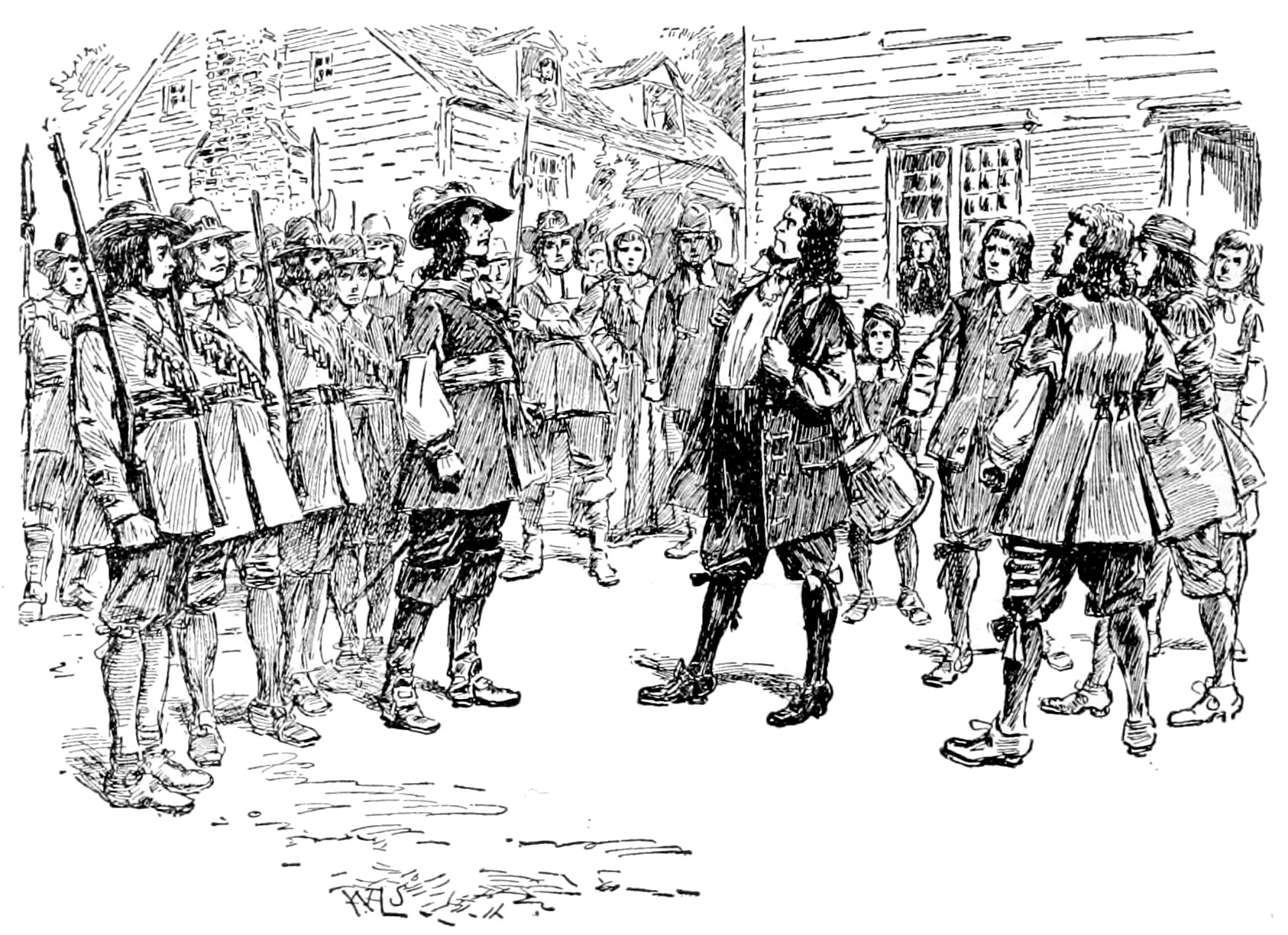
            The moment in American history that has now become known as Bacon’s Rebellion in 1676 offers insight into the psyche of a collective social consciousness of 17th century settlers in the Virginia colony. This is achieved not only through actual events that occurred during this time period recorded through primary sources, but also how these events were interpreted, throughout all levels of society, creating differing narratives that place emphasis on the incident’s varying causes, implications and nuances. A complete exploration of the Virginia colony’s social, political and economical atmosphere in the years leading up to Bacon’s Rebellion is necessary for historians to conduct and record true surveys that can be referenced and learned from as time progresses. As James D. Rice suggests in Tales from a Revolution, Bacon’s Rebellion should not be understood as a sensational uprising from a rouge group settlers led by one man, fighting for change, but rather a pre-Revolutionary example of resiliency and retaliation from a group of people who believed that their unfavorable conditions were so overwhelmingly oppressive that a need for rising against it by any means possible was necessary for the betterment of themselves and the future inhabitants of the colony. Rice challenges mainstream history’s focus on Bacon and instead uses him as a composite representative of a revolutionary-driven colonist faced with challenges that encompassed all areas of society, social, political and economic.
            Late 17th century Virginia was the New World’s southern hub for trade and the accumulation of revenue and resources for the Crown. However, the colony was inhabited both by European settlers as well as displaced native peoples of various tribes responding in different ways to the presence of the Europeans and how they would affect the survival of the native’s people and natural resources. The Europeans traded with the Indians and, at times lived in close proximity with them. Conflict would arise, however, because of the absence of an effective system serving to protect the integrity of these interactions often leading to whatever arty who was wronged taken justice into its own hands and creating further tension. Rice gives an example of this type of conflict with Thomas Matthew. Matthew, a planter at Cherry Point had some of his livestock taken from him by Doeg Indians as a response to him cheating them out of what was owed for a transaction (Rice, 5). This heist led to retaliation by Matthew and some of his fellow Englishmen going after and attacking the Doegs. Evidence of such vigilance against the natives as well as the overall clash between the two cultures shows how much of an impact it had on the eventual uprising in Virginia. Natives and Europeans attacked and pillaged from one another under no effective structure of the government.  The settlers felt that this hands-off approach from their government regarding attacks by natives was highly unjustified and corrupt. In addition to the settlers’ distrust in their government’s lack of protection, Governor William Berkeley’ identification of any type of militia formed against the natives as mutinous rebels create an irreparable rift between the working class and their governing body (44). The increase in the amount of attacks and the governor’s failure to address the issue effectively in the way the settlers wanted was a root cause in the uprising. Fear of the natives and the social rhetoric of savage beasts ravaging the land and killing innocent Englishmen promoted the need for retaliation for those who may not have been directly involved by such matters.
            Taking fear of the natives and a strong disconnect between the government and the people and combining it with the poor economic state of the colony at that time created such a heightened level of distress that change was necessary. Virginia’s dependence on tobacco farming created a period plagued with substantial drop in price for the commodity as well as high taxes being imposed in order to pay for structures and systems not necessarily beneficial to a working class Virginian. “Additional taxes to pay the legislators’ (the Burgesses) general expense allowances during frequent assemblies were bitterly resented (15)…a growing chorus of complaints blamed the commissioners of Virginia’s county governments for levying such heavy taxes, which heavily burdened small planters who grew little tobacco or had little to spare” (16).
Tobacco farming required substantially large amounts of time land and labor before the profits of the 13th month harvesting process could be reaped; all factors that Virginia could not expend. This economically distressed state further agitated the mentality of the average Virginia who could no longer live in prosperity and provide for the security of his family nor feel that he was being rewarded for the amount of work he put in. This was a time of desperation and a need for action. Figures such as Bacon, with his call to battle against injustice appealed to the oppressed and provided for the motivationally driven force of ‘soldiers’.
            More can be learned about the motivation behind Bacon’s Rebellion by addressing the primary sources directly, especially those from Bacon himself as well as his supporters. In regards to what Bacon identified as “the Indian troubles”, one learns that the trade system was a primary issue behind the need for ratification. “…no Trade should be held with the Indians, notwithstanding Which our present Governor monopolized trade with the Indians and granted licenses to others to trade with them…I fear we shall be all lost for this commerce having acquainted the Indians…(Bacon 1676). Bacon addresses the Governor’s blatant protection of the interest of the interest while seemingly putting the settlers’ issues aside. He believes that the governor personal benefits from these diplomatic arrangements and that Berkeley’s attitude towards his own people is characteristically traitorous to the colonists. In Bacon’s Declaration, he lists a series of grievances against the governor and the current state of affairs including Berkeley taking advantage of magistrates for personal interests, his monopolization of beaver trade and showing favor towards the natives, and the governor’s essential blocking of Bacon or any other settlers to assemble militias to not only protect themselves but to eradicate the threat of natives altogether (Declaration, 1676). Perhaps even more important to understanding the causes for the Rebellion is the testimony ad declaration from the people themselves. Had Bacon been the only representative of a class bent on revolution, the reliability of its causes would be scrutinized much more, however, sources exist from petitions of grievances from the people of Surry and Isle of Wight counties a year after Bacon’s Declaration expressing many of the same grievances he outlined. The people condemn the governor for unfairly taxing the planter class and exempting large landowners as well as their seasonally increasing tax money not being able to be accounted for. Criticisms dealing with the political and judicial systems are also made residents calling for ratifications in term lengths for officers and, more importantly, public Court proceedings to be held (Surry, 1677). In a similar address of grievances from residents of the Isle of Wight county calls for “continuous war” with natives in order to eliminate them as a force entirely. This is important to understanding relations between settlers and natives because this county laid on the frontier, an area closer to native tribal lands therefore they were more affected by hostility and conflict between the two groups than citizens of more centralized localities. These citizens, as well as Bacon and his associates, make note that what was taking place in Virginia under Berkeley was not conductive with proceedings in England under the king. A ‘good vs. evil’ mentality is utilized throughout the corresponding documents juxtaposing the benevolently prudent intentions of the rebels with the evilness and savagery of natives who aim to kill and plunder with no remorse under the protection of the corrupted and immoral governor Berkeley. The Isle of Wight County inhabitants further state their actions as an uprising, “…not that we rose in any ways of a Rebellion against our most [dear] Sovereign Lord the King as our actions may appear…”(Isle of Wight, 1677). This is a significant acknowledgement and is necessary for the understanding of what Bacon’s Rebellion truly was; a collective of settlers aimed at the protection of their interests and the integrity of their moral values taking it upon themselves to directly challenge and attack the forces prohibiting ideological prosperity.
            Revolutionary moments in time are subject to subjective criticism as there is never one side to such an event. In most cases, each side participating in a conflict believes that they are right and the defeat of their opposition is objectively justifiable. In the case of Bacon’s Rebellion, one individual serves as the main focus, both as protagonist and antagonist. From the Berkeley administration’s standpoint, Bacon was nothing more than a voice that spread his seditious propaganda enough that it reached the attention of impressionable men who chose to rebel against authority whereas Bacon’s supporters would have seen him as a transformative organizer and leader for the just cause of revolution. Perceptions aside, labeling this event Bacon’s Rebellion may take away from all the factors involved that led to the uprising. The issues of violence, corrupt and opaque political practices, and a heavily expressed economical system are indispensable to the understanding of this event. Identifying such moments of population-driven revolution with distinct namesakes or monikers devalues the information that can be learned from them and likens them to offshoot, arbitrary incidents. These issues have occurred and could potentially arise in any given society, at any given moment in time; therefore, the causes of such events and the context of the time and state they occur must be thoroughly evaluated before being labeled blanketed titles hurt their historical and societal significance.

Works Cited

Bacon, Nathaniel. "Nathaniel Bacon's Account of the Indian Troubles." Virginia. 18 June 1676. Declaration.
The Declaration (1676) (testimony of Nathaniel Bacon). Print.

"Petition of Grievance by the Inhabitantt of Surry County." Virginia, Surry County. March or April. 1677. Petition.
Rice, James D. Tales from a Revolution: Bacon's Rebellion and the Transformation of Early America. New York City: Oxford University Press, 2012