Monday, June 15, 2015

The Stono Rebellion - Tajae Pryce

         
         The slave uprising known as the Stono Rebellion was a significant event in American history and was a catalyst for new changes and perspective insight regarding the colonial slave system moving forward from the event. The revolt was the largest of its kind on a mainland British colony and resulted in new policies being passed that would mandate every aspect of a slave’s life as well as his master and the residents of the locality to which he was bound. The cause of this insurrection was not a singular one, but a combination of motives that encouraged slaves to call for liberty by any means necessary as they charged southward to freedom from their plantations. The promise of sovereignty in Spanish Florida and the intrinsic desire to escape from the sadistically oppressive institution of colonial slavery were the most pressing reasons for the uprising, however, closer evaluations of the history and origins of the enslaved people and the social and cultural climate of the South Carolina colony must be done in order to sufficiently create theses on the core triggers of the rebellion and how much of an impact these eventually defeated dissenters had on American history.
Editor Mark M. Smith has compiled a collection of documents and research related to the topic that attempts to approach the Stono Rebellion with all possible factors and implications in mind. The sources about the event lack much definite objective insight due to the majority of these sources being second-hand accounts given by upper-class whites. Given this challenge, Smith and any historian addressing this event, must employ rational historical methodology and attempt to create a narrative of the Stono Rebellion that is impartial and one that takes into consideration the elements of time, culture and socioeconomic contexts.    
            A true understanding of the nature of the Carolina colonies must be reached when evaluating any moments of crisis that took place during the age of American colonialism. With Carolina being a proprietary colony, its main purpose was to generate as much sustainable revenue as quickly as possible. Once established, droves of generally rich planters, mostly of Caribbean plantation wealth, migrated to the colony and attempted to recreate the success they had seen in tropical islands such as Barbados, which had now been depleted of available land and resources for further expansion. After failed attempts at cultivating crops that had flourished in island climates, planters gradually shifted to forced human labor to supply the need for innovation and exhaustive manpower. Eventually the rise of the rice planation would ensue and thus the need for manual labor and knowledge of rice production in the form of imported enslaved Africans. This new cash crop required specifically nuanced procedures in its cultivation from tilling to harvest that had been practiced for centuries on the African continent. Rice cultivation, before expansive mechanization, also needed a large workforce providing for the construction of necessary infrastructure and for intense, backbreaking manual labor.  The growing success of rice culture and the concurrently growing need for African labor created a colony of a substantially black population with concentrations especially in the coastal areas. These starkly different ethnic groups and the element of enslavement and subservience created rising tensions that only escalated as slave codes for control became stricter and the African’s basic desire for freedom swelled.
            From the founding of the Carolina colonies, run-away slaves had always remained an issue for planters. Slaves escaped from their confinement and live in hiding in maroon societies or take the risk of attempting to seek refuge in an Indian community. Both of these options were the less than ideal in providing for the Africans’ prolonged security or their ability to live in a proper civil social system. Carolinians placed bounties on runaways and the threat of capture for the maroons and betrayal for the blacks that had runaway to Indian communities was always probable. However, by 1738, Spanish settlers and former enslaved Africans established Fort Mosé that, along with serving as a military stronghold near San Augustin, acted as a sanctuary for run-away slaves who were recognized as freedmen if they could reach its territory. This Spanish-Floridian safe haven appealed heavily to the enslaved Africans in Carolinas and an escape to Fort Mosé would have been the goal of the slaves involved in the Stono Rebellion had they not been compromised. Spain’s significant disruption of Carolina’s slave system is widely regarded by as the main cause of the Stono Rebellion with colonists at the time and historians since theorizing infiltrators being sent northward convincing slaves to rebel and subsequently escape to Florida.
            Accounts from a Georgia trustee member, Colonel William Stephens, exposed historians to the common belief in the months preceding the Rebellion of the existence of Spanish spies at work inspiring slaves to rise against their masters, thus creating a white society plagued with fear and distrust of strangers. Stephen’s journal recounts the seizure and interrogation of a suspicious individual in Georgia by magistrates regarding his true origin and intention for being in the colony. After eventually revealing to be from Old Spain, the individual was arrested and relegated to “no better that a Spy”, and committed to the Colonial guard. Upon the call to war with Spain from England and notice to assign guards for the diversion of Spanish infiltration, Stephens and his associates further justified fearfulness of the Spaniard due to their probable involvement in the corruption of British colonial slaves.
            Imperial tensions as the cause for the Rebellion are further cited through Smith’s investigation as is shown through his inclusion of an account from an unidentified source from October of 1739. African slave alliance to the Spanish through religion and language are also expressed in this account; theories that add further depth to the intentions of the rebels. The author writes of multiple Spaniards being taken under arrest for “strolling around Carolina”, reinforcing the fear of infiltration as cited in other sources. The writer also expresses the belief that the Africans were mostly brought from the Kingdom of Angola where the Portuguese language was highly prevalent thus somehow making the Africans allies to the Spanish speakers. He also writes that many of the slaves were Roman Catholic, the presiding religion of the Spanish.  South Carolina’s Lieutenant Governor William Bull, who provides the only true firsthand account of the Stono Rebellion, directly associates the uprising with encouragement from Spain’s declaration of San Augustin being a safe haven. In addition to individuals and politicians blaming Spain for the insurrection, South Carolina’s official report of the Stono Rebellion states that, “…the Negroes would not have made this Insurrection had they not depended on St. Augustine for a Place of Reception afterwards was very certain; and that the Spaniards had a Hand in prompting them to this particular Action there was but little Room to doubt…”.
            Smith includes a 1930s interview from a descendent of the alleged leader of the Rebellion and notes the faults that could come from using such a far removed individual as a historical source. George Cato’s account is comprised of stories passed down through generations in an oral format and can be used to provide some insight into the more cultural and even individualistic nature of the rebels from a black perspective. Cato speaks of his great-great-grandfather commanding the army of rebels and always being a man willing to die for what he felt was right. He also described the Cato of the Rebellion as one who would risk his life for the benefit of others and who was not abused like other slaves, which may have been why he was chosen as leader. Cato puts some blame on the rebels being drunk to their eventual downfall but depicts them as marching unbroken to their executions. This interview details particular event of the battle in the same likeness as other accounts so some reliability could come from it. It also reveals the traits of masculinity and resiliency aligned with the rebels that had not been expounded upon before in other white sources.
            Along with individual accounts from the studied time period, Smith draws sources from contemporary historical interpretations. Duke University professor Peter H. Wood offered one of these interpretations, which has been regarded as the first modern historical account of the Stono Rebellion; in 1974. Wood evaluates the impact that the Rebellion and others like it would have on white colonial society, describing the event as one that “awakened the attention of the most unthinking”. The ever-present threat of armed black rebels arming themselves and going on a rampageous slaughter of white men, women and children now hung over the head of many in the colonies. Wood also describes the Rebellion as a significant moment in history due to its organized resistance to slavery. Before Stono, slave resistance took the forms of unplanned incidents of opposition and escape. The Rebellion, however, was an event with some premeditation that resulted in the murder of at least sixty whites and would serve as precedent to larger, more impactful episodes of black defiance. The impact of the Rebellion can be shown through legislative evidence in the form of 1749’s “Act for the Better Ordering”, or the “Negro Act”. South Carolina’s General Assembly redefined slave codes and imposed new regulations for the behavior of both white and black inhabitants including restricting freedoms once had by slaves and identifying allowable amounts of physical punishment that a master could impose on his slaves. Slaves were restricted to their plantations unless accompanied by a white person, barred from acquiring alcohol, legally own a firearm and could no longer assemble with other slaves unaccompanied. Per the Negro Act, however, whites were fined for providing services to slaves, working slaves on Sundays, or allow their slaves to barter for any goods or commodities.
Peter H. Wood also details the spread of fear during this time period as planters around the area would relocate with their families to safer locations and the General Assembly constantly patrolling the Stono area. There were also rewards available to Indians and blacks who aligned against rebel slaves. The suppression of the initial Stono rebels did not stop the occurrences of further slave revolts as slaves banded together to strike or aggressively resist their masters for years after the Rebellion. Slaves in Berkeley banded together “in defiance” 100-250 strong. The Settlers hastily responded to reports of uprising throughout other colonies including in the North in 1741. The fear of armed revolt by the large mass of enslaved blacks led South Carolina’s Assembly to begin penalizing masters who could have enhanced the slave revolts with excessive abuse and unwarranted hard labor. New sanctions for both races represented the desperation of the settlers in preventing uprisings. One significant policy was the requirement of one white man to be present to account for every 10 blacks at any given time in order to associate for the drastically high population of blacks as a result of rice culture. However, most of these new impositions and sanctions were ignored and broken in secrecy. There was no true system to account for every slave or citizen within the colony nor could the amount of slave labor be reduced if the colony wanted to maintain its flourishing agricultural profiting.
Another perspective of why the Stono Rebellion occurred comes from historians who attribute the tactics and strategic characteristics of the rebels to their African heritage. One of those historians is John K. Thornton who, in 1991, drew from his studies of Western and Central African customs to interpret why the slaves rebelled and how they more than likely carried out their plans. Thornton dispels the idea of the slaves coming primarily from “The Kingdom of Angola” and offers Kongo as the most likely source of Britain’s slaves based on studies of the Royal African Company’s practices. Thornton also takes into account war tactics of the rebels and compares them to that of the Kongolese and, more importantly, the fact that most slaves captured in Africa were captured during battle or in a war.  Thornton also notes that Kongolese fighters would have been exposed to modern guns by this time period and how well the enslaved rebels fought with their guns when on attack. The rebels also marched in formation under banners and beat drums calling for battle much like armies and militias in Africa. Thornton speculates that the Stono rebels were either trained militants, observed militant operations in Africa, or had tactics passed down from Kongolese relatives. He introduces a deep dynamic into not only the Stono Rebellion but other early uprisings of African slaves throughout British territories as well. The cultural differences that existed throughout the vast nation of Africa, with its vast array of tribes and regional interests, are often scarcely taken into account when examining the sociological factors that affect the behavior of migrated Africans; instead, they are frequently maligned as a collective of culturally lost individuals in need of white direction.
            Mark M. Smith, the book’s editor, offers his own interpretation of the reasons for the Stono Rebellion’s occurrence. He draws from his collection of reliable sources to base his understanding on, but forms a thesis based on religious significance that should be looked at more closely. Smith takes Thornton’s Kongolese thesis and takes into account the importance of Afro-Catholicism practiced in that region and perhaps the Stono rebel’s recognition of their faith. He attributes the weekend that the rebels chose to attack, the September 9th, as their acknowledgment of the Day of Nativity of the Virgin Mary on the 8th. The chosen date for the slaves revolt and the iconography of marching under white banners, a color closely aligned with the Virgin Mary, may indicate a deeper purpose for going against their oppressors and enemies to the true faith as opposed to only representing Kongolese battle flags. Beating of drums is also associated with Holy Saturdays and Mary in the Kongo. This theory can not be easily proven, but its legitimacy would further align the rebels heritage with that of the people of Kongo and add another dynamic to their motives and the confidence they exhibited as told through multiple sources; religious faith.
Smith’s collection is done in a way that multiple voices and interpretations can be evaluated and opportunities for the reader to deduce his own opinions are prevalent. Most effectively, the author provides factual historical evidence of the state of the Colony in the 18th century to supplement for a lack of firsthand accounts on the actual event. Associating specific cultural customs and traditions further strengthens the Smith’s notion of the Stono Rebellion being a deeply rooted and significant moment in American history with effects that far surpassed fearfully drawn “Negro Acts” and imposed sanctions. In my opinion, John K, Thornton’s introduction of African heritage and cultural ties playing a larger role in the revolt that is the most effective argument presented in this collection of historical analysis. The slaves could not be assimilated into British colonial culture because they were bound to subservient roles and not considered as equals to the Europeans. Therefore, the slaves held on to their African traditions more so than the colonists would recognize their own heritages because it is what kept the Africans in a state of solidarity amongst each other. Their only defense in states of oppression was to turn to what they knew and thus evidence of African strategy and behavior was exhibited in the uprising.  The Stono Rebellion should be seen as a representation of the universal need for freedom and self-determination and the spirit exhibited in a select few in a given generation to challenge injustices and spark a revolution. I believe that when interpreting moments such as the Stono Rebellion, it is of most importance to study the social, political and economic climate of the region studied. Rather than overemphasizing leaders or scrutinizing specific details of a moment of crisis, the question of why those causing the crisis feel that their only option is to revolt must be answered. Proprietary colonies such as South Carolina were not governed or mandated with future generations in mind nor was the importance for civic cohesion among all inhabitants of the land ever truly exhibited. There can be no prolonged periods of peace in an area where members of its population feel that they have no access to justice.
          

When the Levees Broke: A Requiem in Four Acts Film Review by Tajae Pryce


A requiem can be defined as a ceremonious remembrance for a passing; a memorial of sorts. In my opinion, Spike Lee’s choice of naming this documentary “A Requiem in Four Acts”, serves to recognize the devastation caused not only by the Hurricane Katrina, but by what many saw as negligence by federal and local authorities in regards to preparing for the storm and evacuating people before its landfall. Lee collects firsthand accounts from residents, authorities and family members that detail the destruction that ensued and also includes footage of news coverage and analysis of weather and emergency experts to provide objective evidence for why much of the human loss could have been avoided. This requiem could also been seen as a way to provide a form of justice for the affected residents who for decades have felt distrust against the state and federal governments during times of natural disaster.
There was some blame put on many residents who believed that they could ride out the storm citing previous hurricanes such as 1965’s Hurricane Betsy, which had also directly hit the area. The government, however, must be held accountable for not enforcing the mandatory evacuation that was declared. Many were trapped for days on the streets and the roofs of their homes and also held at the Super Dome convention center with no signs of any impending release in terms of evacuation. Many did not have the funds, transportation or a location to evacuate to so they had no means to follow the evacuation orders. It is the job of the government to assist those who were not able to evacuate in time, which was not properly done. State officials prioritized business districts and communities first in terms of aid and evacuation, protecting their economic interests while neglecting the citizens who would have needed help the most (When the Levees Broke, 2006).
 The major downfall of the storm was not necessarily the damaging winds, but the massive flooding that took place throughout the Gulf and especially the city of New Orleans. Two major flood events immediately after the initial hit were the flooding of the Florida Avenue and 17th street areas as water from Lake Pontchartrain swelled over embankments and flooded the streets (When the Levees Broke, 2006). Emergency officials addressed the crisis by relocating residents to shelter of last resort, areas that were capable of housing individuals for a short amount of days before more resourceful help arrived in the form of the federal government. Unfortunately such response was neither immediate nor speedy, as the city received no true signs of federal assistance for at least four days. The images from the aftermath of Katrina were devastating. Many compared the conditions to those of a region at “a time of war” (Levees, 2006).
In the weeks following the storm, most of the victims had relocated to neighboring states with reports of 12,000 moving to Tennessee, 20,000 to Arkansas, and 150,000 to Texas with numbers rising each day (Levees, 2006). In major cities with concentrated urban areas such as Houston, a rise of violence perpetrated by small groups of degenerate evacuees took place leading to law enforcement to increase resources and manpower in response. Reports of over a dozen Louisiana evacuees being suspects in murders in Houston intensified the rift between migrants and Texans as well as strengthened racial tensions in the city (Levees, 2006). The evacuees were dispersed indiscriminately which led to broken homes and missing relatives being a constant narrative. For months, thousands of people had no way to contact missing friends and relatives or to find out information on the state of their homes and communities. Tensions and levels of distrust between the black community and the federal government increased as no suitable explanation for the President or members of his administration were ever reached. This tension was expressed to a worldwide audience infamously by Kanye West who, while giving a speech for a fundraiser for Katrina relief, decided to go off script saying, “George Bush doesn’t care about black people” (Levees, 2006). His statement represented the voices of many who felt betrayed and believed that because the areas affected by the storm were primarily black, the federal government did not distinguish the crisis as a priority.
The President did not visit New Orleans until two weeks after Katrina, further offending the victims who would never forget his negligence to the crisis. I believe that the federal government and the Bush administration should be primarily held at fault for unnecessary lost of life and illness following the storm. State officials have gone on recorded expressing their repulse at the lack of timely federal response (Levees, 2006). The Federal Emergency Management Agency, FEMA, was established to provide relief to the nation in times of disaster but was not present for days and once the evacuees were displaced, redacted funds that aided victims in paying for rent and food. Residents of Louisiana have stated that “the aftermath [was] worse than the actual levees breaking” (Levees, 2006). The victims were not properly aided once evacuated and could not establish themselves in the new states they found refuge in. The evacuees were essentially left without a home and away from families with their deep-rooted cultural ties to New Orleans left unsatisfied. The delegation of the evacuees as “refugees” by major news networks further established them as strangers in their new communities making them feel as if they were not taxpaying American citizens. Reverend Al Sharpton, representing the Congressional Black Caucus, would go on to address the press calling for an end to the insensitive classification of the evacuees as refugees (Levees, 2006).
Documentaries are often made with political intentions; however, a good documentary takes its content from objective sources and firsthand accounts and images. I believe that documentaries are useful for teaching history because they are a medium that can reach a variety of audience in many cases more than a collective research document would. Historians should be wary of documentaries that do not include all forms of sources, especially primary accounts. When the Levees Broke was done effectively because the information was presented and collected from primary sources that were directly affected by the events. Rather than only using news coverage or official reports after the fact as sources, Lee includes the voices of the victim, the evacuees, local law enforcement and analyst to create a true interpretation of the events proceeding, during and after Hurricane Katrina.
                                  Works Cited

When the Levees Broke: A Requiem in Four Acts. Director Spike Lee. HBO Documentary Films/ 40 Acres & A Mule Filmworks, 2006. .avi File.

Friday, May 29, 2015

The Salem Witch Hunt: The Case of Tituba by Tajae Pryce


New England in the 17th century was a society contrived of Puritan settlers who incorporated their belief systems into the social structures in which they upheld. Church leaders and political figures were essentially one in the same and cases of blasphemy, or any other act seen as going against the Puritan faith, were seen in the same legal light as instances of civic misconduct. These settlers generally believed that the world around them was a spiritual place and that the Christian God played a direct role in all matters of fate and circumstance through predetermined providence. In such a society, moments of crisis such as 1692’s Salem Village’s witch-hunt held much complication and encompassed all levels of life. Closely analyzing the details behind some of the accusations of witchcraft, such as the evidence presented against certain individuals is necessary for historical analysis of the culture and mentality of the New England colonists at this time period. In the case of one of the first individuals to be accused of witchcraft, Tituba, one can evaluate records of court proceedings and accusations to find out more about how the colonists viewed outsiders, both from their ethnicity and their society, as well as the extent to which this society was willing to seriously credit supernatural possession as the cause for the afflictions.
Tituba was a slave of Salem’s minister, Samuel Parris, whom had been purchased in Barbados.[1] She could be described as Indian or African; however, records of slaves and their race were often relegated to arbitrary distinctions based on skin color or physical appearance. It is to be noted that Puritans did believe that Indians inherently worshipped the Devil, therefore, it can be rightfully assumed that anyone a darker race than the settlers were looked at with suspicion and caution. The villagers also had prior attribution to Tituba and dark magic as stories of her knowledge of witchcraft and the occult from her past were widely known.[2] Suspicions of direct Tituba’s involvement in the Salem crisis came to light after the affliction of Samuel Parris’ daughter and niece. After succumbing to drastic changes in their temperament and exhibiting signs of what the colonists referred to as “fits”, the young girls were determined to be bewitched, both by Salem’s residents and the villages’ presiding physician.[3] The girls exhibited wounds on their bodies believed done by agents separate from their own selves, and evidence of witchcraft was thoroughly sought. Tituba was named as the inflictor of the evil deeds by the young girls and was examined and questioned by the presiding councils. Tituba admitted to being learned on the art of the detection of witchcraft due to her being taught by her mistress in Barbados.[4] While being interrogated, she would eventually confess that she was indeed bewitched and had allied with the Devil to carry out his work and went into detail about how others and herself went about with the molestation of the innocent and their convenience with Satan.[5] Her testimonies, however, varied over the course of her interrogations. There were instances where Tituba denied all claims of witchcraft and instances where she provided specific details on her meetings with the Devil, the convent made between them, and the names of her accomplices. Her confession played a major role on the credibility and necessity of both the accusatory trials and concurrent witch hunts as her admittance provided evidence of the existence of witchcraft in the community and prove that others were indeed hiding their true selves. According to neighboring minister John Hale, Tituba’s confessions were held as credible due to the consistency of her answers given during her multiple interrogations, her repentant nature during her trial, and because her confessions aligned with the accusations stated by her afflicted victims. Her interrogations and subsequent confessions were regarded as a success by the council as more suspects were brought to light and details of what the allegiance with the Devil actually entailed emerged.[6]
            The format in which the trials and interrogations were performed can be seen as fundamentally flawed. Magistrates presiding over the trials had no formal legal training, nor were they secular or partisan in nature. Officials did prepare by researching legal and medical surveys on the topic of witchcraft and dark magic, but theological principles were the most important source of information to be taken into account in Puritan Salem. Spectral evidence was assessed in virtually all trials and the existence of witchcraft itself was implicit.[7]  The accused were beaten and fervently interrogated once taken in and execution was an inevitable fate to those who were convicted of the crime or for lying about their involvement. Confession with the provision of accomplices’ would oftentimes lead to lesser punitive sentences and spare one from brutal execution, as was the case with Tituba.[8]
 The Puritan view on women also played a role in terms of bias during the witch-hunt. Through the Puritan interpretation of the Bible, women were viewed as spiritually weaker than men.[9] Most of the accused were women and few mentions of men being the cause for the afflictions are given in the sources; only as victims. In Tituba’s case, she was at an even greater disadvantage and her accusation was perhaps expected seeing that she was not only a woman, but also a different ethnicity. “Indians”, as Tituba was described, were cast as devil worshipping barbarians who, although had the capability to be converted, were still associated with evil. Stereotypes assumed by the colonists of Tituba’s ethnicity and her known involvement in magic affairs, such as her witch-detecting urine cake,[10] made her not only a prime suspect, but also a suspect who was seen as a way of exposing other witches.
The mentality the settlers had regarding Indians and the certainty of Tituba’s involvement even before her admittance shows that they more than likely saw Indians as an enemy to the integrity of Puritan and New England society.[11] The war-like mentality by ministers such as Deodat Lawson and others exhibits a need for the elimination of all things evil and destructive to the church. Lawson’s rhetoric of “devils” penetrating the church was also used in regards to Indians attacking the lands of the settlers. These attacks were viewed as being assaulted by the Devil himself.[12] Putting Tituba on the forefront of the witch-hunt and as the primary conspirator with Satan himself, could have potentially allowed lawmakers, who are also church leaders, to systematically impose policies that would make it more difficult for the integration of both Indians and people of African decent into Puritan society. Assimilation of these people could now be seen as a threat to the threads of religious piety, which were fundamentally woven into New England communities. Also serving as a threat to traditional Puritan society was the diversity of values and moralities. As new generations of settlers emerged as constructive members of society and older generations phased out, new focus on economic advancement and new ideas would diminish the importance of religious values of the community. Such was seen as a decline in morality and as work by the Devil.[13]
Tituba’s circumstance of being an Indian slave woman simply claiming to know about witchcraft in 17th century New England all but guaranteed suspicions of her being part of the cause for the afflictions in Salem if not the main instigator. Her confessions, however, brought forth by fear or torture, were essential in providing justification for conducting more witch trials and certainly expanded the longevity of not only the trials, but also the paranoia associated with witchcraft. Tituba’s confessions confirmed the theories of the believers and probably changed the minds of some skeptics showing that the afflictions in Salem were not matters of circumstance but truly signs of the Devil infiltrating their society. It must also be questioned, what options did Tituba have once put on trial? She had no true social standing in the community and had no supporter system to back her up had she remained in denial of the allegations. She was made aware that her confessions could spare her life; compromising the credibility of anyone’s confessions given such propositions. Tituba’s cultural background also plays a part in why she confessed. Perhaps she truly did believe that evil spirits were at work in Salem. There is no indication that she was religiously assimilated into Puritan life. In fact, she admitted to practicing magic and adhering to her cultural routes and traditions.[14] With no real inclination to adhere to Salem’s society, Tituba’s disconnect from the social system led to her giving some of the most paranormal confessions of all the accused; confessions that would later be deemed not worthy of execution with Tituba’s ultimate fate left unknown to history. Tituba’s role was to both prove the existence of witchcraft and to show the power of Christian redemption and hope for the upholding of Puritan ideologies for years to come.


Works Cited

Godbeer, Richard. The Salem Witch Hunt: A Brief History with Documents. Boston/New York: Bedford/St. Martins, 2011.


[1] Godbeer, Richard. The Salem Witch Hunt: A Brief History with Documents. (Boston/New York: Bedford/St. Martins, 2011)., 81.
[2] Godbeer, 82
[3] Ibid., 51
[4] Ibid., 52
[5] Ibid., 82
[6] Godbeer, 53
[7] Godbeer, 26
[8] Ibid., 53
[9] Ibid., 11
[10] Godbeer, 52
[11] Ibid., 17
[12] Ibid., 19
[13] Ibid., 19
[14] Godbeer, 52

Thursday, May 21, 2015

Causes of Bacon’s Rebellion and its Various Interpretations by Tajae Pryce


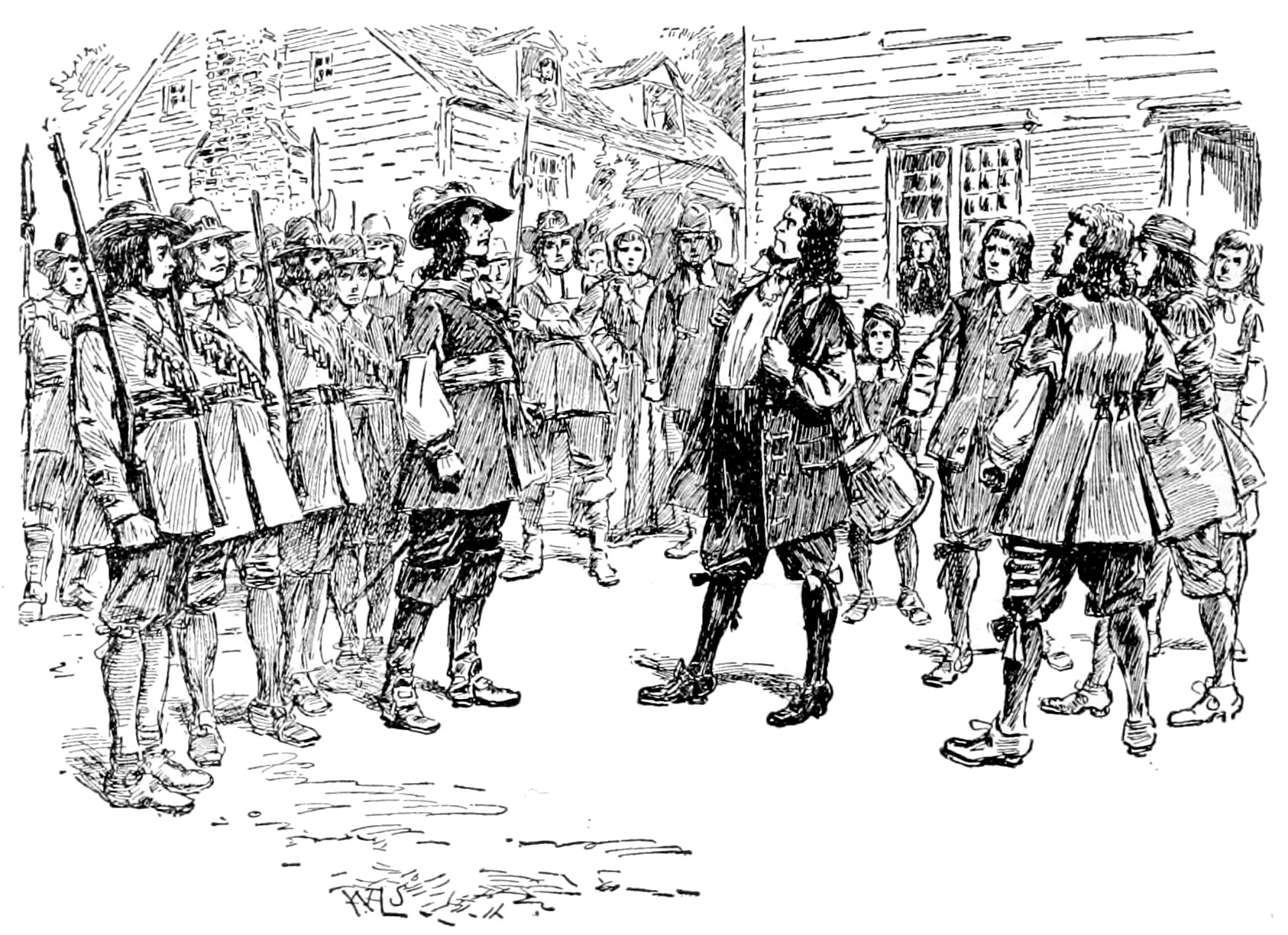
            The moment in American history that has now become known as Bacon’s Rebellion in 1676 offers insight into the psyche of a collective social consciousness of 17th century settlers in the Virginia colony. This is achieved not only through actual events that occurred during this time period recorded through primary sources, but also how these events were interpreted, throughout all levels of society, creating differing narratives that place emphasis on the incident’s varying causes, implications and nuances. A complete exploration of the Virginia colony’s social, political and economical atmosphere in the years leading up to Bacon’s Rebellion is necessary for historians to conduct and record true surveys that can be referenced and learned from as time progresses. As James D. Rice suggests in Tales from a Revolution, Bacon’s Rebellion should not be understood as a sensational uprising from a rouge group settlers led by one man, fighting for change, but rather a pre-Revolutionary example of resiliency and retaliation from a group of people who believed that their unfavorable conditions were so overwhelmingly oppressive that a need for rising against it by any means possible was necessary for the betterment of themselves and the future inhabitants of the colony. Rice challenges mainstream history’s focus on Bacon and instead uses him as a composite representative of a revolutionary-driven colonist faced with challenges that encompassed all areas of society, social, political and economic.
            Late 17th century Virginia was the New World’s southern hub for trade and the accumulation of revenue and resources for the Crown. However, the colony was inhabited both by European settlers as well as displaced native peoples of various tribes responding in different ways to the presence of the Europeans and how they would affect the survival of the native’s people and natural resources. The Europeans traded with the Indians and, at times lived in close proximity with them. Conflict would arise, however, because of the absence of an effective system serving to protect the integrity of these interactions often leading to whatever arty who was wronged taken justice into its own hands and creating further tension. Rice gives an example of this type of conflict with Thomas Matthew. Matthew, a planter at Cherry Point had some of his livestock taken from him by Doeg Indians as a response to him cheating them out of what was owed for a transaction (Rice, 5). This heist led to retaliation by Matthew and some of his fellow Englishmen going after and attacking the Doegs. Evidence of such vigilance against the natives as well as the overall clash between the two cultures shows how much of an impact it had on the eventual uprising in Virginia. Natives and Europeans attacked and pillaged from one another under no effective structure of the government.  The settlers felt that this hands-off approach from their government regarding attacks by natives was highly unjustified and corrupt. In addition to the settlers’ distrust in their government’s lack of protection, Governor William Berkeley’ identification of any type of militia formed against the natives as mutinous rebels create an irreparable rift between the working class and their governing body (44). The increase in the amount of attacks and the governor’s failure to address the issue effectively in the way the settlers wanted was a root cause in the uprising. Fear of the natives and the social rhetoric of savage beasts ravaging the land and killing innocent Englishmen promoted the need for retaliation for those who may not have been directly involved by such matters.
            Taking fear of the natives and a strong disconnect between the government and the people and combining it with the poor economic state of the colony at that time created such a heightened level of distress that change was necessary. Virginia’s dependence on tobacco farming created a period plagued with substantial drop in price for the commodity as well as high taxes being imposed in order to pay for structures and systems not necessarily beneficial to a working class Virginian. “Additional taxes to pay the legislators’ (the Burgesses) general expense allowances during frequent assemblies were bitterly resented (15)…a growing chorus of complaints blamed the commissioners of Virginia’s county governments for levying such heavy taxes, which heavily burdened small planters who grew little tobacco or had little to spare” (16).
Tobacco farming required substantially large amounts of time land and labor before the profits of the 13th month harvesting process could be reaped; all factors that Virginia could not expend. This economically distressed state further agitated the mentality of the average Virginia who could no longer live in prosperity and provide for the security of his family nor feel that he was being rewarded for the amount of work he put in. This was a time of desperation and a need for action. Figures such as Bacon, with his call to battle against injustice appealed to the oppressed and provided for the motivationally driven force of ‘soldiers’.
            More can be learned about the motivation behind Bacon’s Rebellion by addressing the primary sources directly, especially those from Bacon himself as well as his supporters. In regards to what Bacon identified as “the Indian troubles”, one learns that the trade system was a primary issue behind the need for ratification. “…no Trade should be held with the Indians, notwithstanding Which our present Governor monopolized trade with the Indians and granted licenses to others to trade with them…I fear we shall be all lost for this commerce having acquainted the Indians…(Bacon 1676). Bacon addresses the Governor’s blatant protection of the interest of the interest while seemingly putting the settlers’ issues aside. He believes that the governor personal benefits from these diplomatic arrangements and that Berkeley’s attitude towards his own people is characteristically traitorous to the colonists. In Bacon’s Declaration, he lists a series of grievances against the governor and the current state of affairs including Berkeley taking advantage of magistrates for personal interests, his monopolization of beaver trade and showing favor towards the natives, and the governor’s essential blocking of Bacon or any other settlers to assemble militias to not only protect themselves but to eradicate the threat of natives altogether (Declaration, 1676). Perhaps even more important to understanding the causes for the Rebellion is the testimony ad declaration from the people themselves. Had Bacon been the only representative of a class bent on revolution, the reliability of its causes would be scrutinized much more, however, sources exist from petitions of grievances from the people of Surry and Isle of Wight counties a year after Bacon’s Declaration expressing many of the same grievances he outlined. The people condemn the governor for unfairly taxing the planter class and exempting large landowners as well as their seasonally increasing tax money not being able to be accounted for. Criticisms dealing with the political and judicial systems are also made residents calling for ratifications in term lengths for officers and, more importantly, public Court proceedings to be held (Surry, 1677). In a similar address of grievances from residents of the Isle of Wight county calls for “continuous war” with natives in order to eliminate them as a force entirely. This is important to understanding relations between settlers and natives because this county laid on the frontier, an area closer to native tribal lands therefore they were more affected by hostility and conflict between the two groups than citizens of more centralized localities. These citizens, as well as Bacon and his associates, make note that what was taking place in Virginia under Berkeley was not conductive with proceedings in England under the king. A ‘good vs. evil’ mentality is utilized throughout the corresponding documents juxtaposing the benevolently prudent intentions of the rebels with the evilness and savagery of natives who aim to kill and plunder with no remorse under the protection of the corrupted and immoral governor Berkeley. The Isle of Wight County inhabitants further state their actions as an uprising, “…not that we rose in any ways of a Rebellion against our most [dear] Sovereign Lord the King as our actions may appear…”(Isle of Wight, 1677). This is a significant acknowledgement and is necessary for the understanding of what Bacon’s Rebellion truly was; a collective of settlers aimed at the protection of their interests and the integrity of their moral values taking it upon themselves to directly challenge and attack the forces prohibiting ideological prosperity.
            Revolutionary moments in time are subject to subjective criticism as there is never one side to such an event. In most cases, each side participating in a conflict believes that they are right and the defeat of their opposition is objectively justifiable. In the case of Bacon’s Rebellion, one individual serves as the main focus, both as protagonist and antagonist. From the Berkeley administration’s standpoint, Bacon was nothing more than a voice that spread his seditious propaganda enough that it reached the attention of impressionable men who chose to rebel against authority whereas Bacon’s supporters would have seen him as a transformative organizer and leader for the just cause of revolution. Perceptions aside, labeling this event Bacon’s Rebellion may take away from all the factors involved that led to the uprising. The issues of violence, corrupt and opaque political practices, and a heavily expressed economical system are indispensable to the understanding of this event. Identifying such moments of population-driven revolution with distinct namesakes or monikers devalues the information that can be learned from them and likens them to offshoot, arbitrary incidents. These issues have occurred and could potentially arise in any given society, at any given moment in time; therefore, the causes of such events and the context of the time and state they occur must be thoroughly evaluated before being labeled blanketed titles hurt their historical and societal significance.

Works Cited

Bacon, Nathaniel. "Nathaniel Bacon's Account of the Indian Troubles." Virginia. 18 June 1676. Declaration.
The Declaration (1676) (testimony of Nathaniel Bacon). Print.

"Petition of Grievance by the Inhabitantt of Surry County." Virginia, Surry County. March or April. 1677. Petition.
Rice, James D. Tales from a Revolution: Bacon's Rebellion and the Transformation of Early America. New York City: Oxford University Press, 2012

Friday, May 1, 2015

Miguel de Cervantes’ “The Dialogue of the Dogs” as Social Commentary by Tajae Pryce


            “In The Dialogue of the Dogs”, Cervantes employs the use of colloquial exchange between two characters to touch on various aspects of society in early modern Spain. This dialogue, however, is irrationally taking place between two dogs sharing autobiographical stories allowing Cervantes’ social satire and criticisms to come across as more accessible to his audiences rather than blatant denigration. A few of the social topics he addresses through this unconventionally constructed short story are the corruption of authority, both civic and religious, the effects of disconnected systems of power in morally misguided societies and the plight of creative artists and writers such as himself of being true to their works or creating publications tailored for mass appeal.
            One of the stories Berganza the dog shares is about his time in a slaughterhouse in Seville. Here, he is exposed to people of selfish intentions who have shunned morality and proper social order in pursuit of the attainment of their own self-interests. “…They are like vultures, maintaining themselves and their mistresses on what they steal” (253). The unsupervised workers at the slaughterhouse allowed their true personas to show, doing whatever it took to plunder prime cutes of meet for themselves including causing harm or imposing death to others without much remorse, as Berganza explains, “But nothing shocked me more or struck me as more scandalous than to see that these slaughterhouse workers will kill a man as easily as a cow”. The actions of these workers represent the tendency for society to act in a mob mentality when presented with opportunities, especially in societies where immoral behavior was as commonplace as in early modern Spain’s working class. This may also be a representation of Cervantes’ view of Spain’s lawmakers and nobility governing a population whom they have no connection nor direct intervention into their day to day lives, seeing how these laws actually impact the people. Rather, the nobility employs public servants as protectors of the legal system despite the fact that these servants can be just as immoral and self-interested as other social deviants.
            “Dialogue’s” episode detailing Bergama’s tenure as a shepherd dog, addresses the corruptive nature of humankind as well as dishonesty in spiritual leadership. The cruelty conveyed through the dishonest shepherds, feigning attacks by wolves in order to steal from their owners, serves as a vivid analogy of shepherds of Christian followers deceiving their blindly faithful and unquestioning flock in order to carry out their own agendas. Spain’s religious system at the time was interwoven with the governmental system, thus allowing for decrees of indulgence requirements and essentially ‘witch-hunts’ for religious deviants. Berganza’s strong loyalty to his shepherd masters leads him to truly believe their commands and accept punishment that may be given to him despite his own rationale because he trusts them. They have fed him, seen him as useful and continuously reinforce their orders. It is not only until he is exposed to the true nature of the shepherds that Berganza is enlightened to the horrible paradox that systematically exists and questions how such a corrupt system based on trust could be exposed to more people. “I was shocked and amazed to see that the shepherds were the wolves and the very people who were supposed to be guarding the flock were tearing it to pieces”, “Who will have the power to persuade anyone that the defenders are on the offensive, that the sentries are sleeping, that it doesn’t pay to trust anyone and that those who guard also kill?” (259). The parallels drawn from the story to Spanish society is Cervantes’ call to action to a conscious collective of revolutionaries who must aim to enlighten society of the corruption that exists in the Church and how the same church that condemns nonbelievers and heretics does so to propagate the gluttonous agendas of those in positions of power.
            Cervantes also comments on the challenges that writers face in his section detailing the poet Berganza meets. Perhaps a reflection of Cervantes’ own impediments, the poet is described as deeply enthralled in the particulars of his play, striving to make it as historically accurate and poetically sound as possible only to be ridiculed and deserted by one of the actors for the poets exorbitance and demands. Cervantes seems to illustrate his own frustrations with a society focused more on sensational and entertaining works of art as opposed to literal contributions that serve to challenge societal inconsistencies and provide historical and rational insight on social issues; thus inciting constructive debate into the social consciousness of a population.  I believe that Cervantes may feel that some of his literary work and especially his poetry had been undervalued by society while contributions such as Don Quixote, a classic in its own right, were more appreciated because of its entertainment value. The poet portrayed in “Dialogue” is fixated on the need for accuracy in his play and his efforts are received as arbitrary embellishments. Cervantes hold the philosophy that art and literature should serve the role of not only reflecting the society it describes, but to also advocate for morality and the rectification of injustices.
            The discourse between Berganza and Scipio is one that allows the audience to view themselves and their actions from a different perspective, one of innocence and simplicity. These dogs provide subjective insight into the actions of various levels of early modern Spain’s society, and the corruption and inconsistencies that exist throughout. Cervantes’ unconventional approach effectively accomplishes his purpose for this short story. He humbles the audience and forces autoscopic reflection, not only for the reader’s own motives and behavior, but also for their societal institutions and cultural norms. The constant theme of corruption expressed through satire in this story is a genre that has been utilized by generations of advocacies in order to allow the level of accessibility needed to incite grassroots-driven transformations of what pillars society chooses to uphold, maintain and ratify.

      De Cervantes, Miguel. “The Dialogue of the Dogs.” In Exemplary Stories. New York: Oxford University Press, 1998

Monday, April 27, 2015

The American Federal Government and the Struggle for Black Equality - Tajae Pryce


       The ongoing narrative of blacks in America encompasses a vast scope of issues that must be evaluated in order to effectively understand the plights, progressions, and regressions that have befallen upon the race throughout history. These topics range from economic and political matters, to social and cultural subject matters as well. An imperative dynamic that must be explored in this narrative is the relationship between black Americans and the federal government in the period directly succeeding the Civil War in 1865, to well over a century later in 1990. Authoritative government policies throughout this period have served to aid in the advancement of blacks and provide unprecedented opportunities for their political and economic involvement as well as their overall status of welfare and social integration and pursuit of civic equality, but have also imposed doctrines and legislative decrees that would only hinder fight for racial equality. History shows that progressive racial policies have not been independent of the perseverance of black spearheads or those who fought aggressively to maintain them using various resources, nor have oppressive policies been implemented without black opposition or vehement challengers. The fight for black equality in America represents a series varied response to the federal government’s attitude towards racial affairs by black Americans as they accommodated and resisted accordingly as to whatever method appeared to be the most effective to their struggle for equality.
            The end of the American Civil War in 1865 brought with it an essential need for a structural restoration of civil proceedings as well as a clear proclamation of a course of action in regards to what the “new” United States of America meant and how its institutions would be established and upheld moving forward. Not only was there now a task of identifying an appropriate governing and renovation of the economically dismantled former Confederate states and to whom was to commence in leading this process, but there now existed the question of what the freedom actually meant in regards to the 4 million freedmen spread throughout the states but mostly concentrated in the South. The definition of freedom varied greatly amongst blacks themselves, white citizens and governmental authorities. The most directly impactful product of emancipation was the sudden bestowment of the right of suffrage for black men. Eric Foner describes the coming of black suffrage as “a sense of millennial possibility second only to emancipation itself” (Foner, 129). Blacks, in this period, were generally proactive in participating in the political process. They engulfed themselves in the acquisition of historical and civil knowledge and took advantage of all mediums for acquiring information. Black Americans partook in a period of jubilee where not only could they cast a ballot, but they had the opportunity to be self determined individuals in control of their familial affairs and were able to openly choose what ideologies and philosophical dogmata to adhere to and those to reject. The access to the ballots for black men as well as many other socio-economic opportunities were quickly diminished, however, due to Andrew Johnson’s Presidential Reconstruction policies. With congress on leave, Johnson proceeded to enforce his own system of reconstruction, an arrangement where former Confederate legislators were essentially given pardons and were able to reclaim lost properties provided that they pledged their allegiance to the United States and paid necessary restitution fees. Presidential Reconstruction would result in the leadership of the South being placed back in the hands of the same white, elite class whose main objectives were to uphold an economy and social society driven by the fruits of cheap, black labor. Immediately, systems were put in place in the South to once again compel blacks to work and to limit the amount of freedom afforded to them. Black Codes throughout the South made it virtually impossible for blacks to work without being contracted by white property owners and could be arrested under charges of vagrancy if they could not show proof of contractual work obligation. The ability to acquire land was restricted to those citizens deemed as skilled laborers, which translated into white landowners with the ability to develop and certify skilled trades. Blacks were systematically forced out of the judicial system and could neither participate on juries with whites nor testify against white citizens leading to highly disproportionate black conviction rates and indictments oftentimes made from falsified reports. New forms of child apprenticeships also became prevalent where former slaveholders could, under their discretion, take a black child to work for them for undisclosed periods of time and in return for relatively unattainable profit returns. Black Codes aimed to reestablish the ideologically racist slave system that had been the standard in the South’s economical and social system before the Civil War and Lincoln’s order for emancipation.
            In response to Black Codes, opposition to such legislative policies grew feverishly coming from not only Republicans and Radicals in the North, but from organized blacks as well. Blacks had organized themselves into informative coalitions of activists and awareness mediums, rallying for changes to government and a ratification of Johnson’s method of reconstruction. 1867’s Military Reconstruction Acts were brought about by the actions of black organizers collaborating with white Republicans demanding congress to intervene and enforce more civil legislation. Once delegates were appointed to throughout the South, allowing for the ability for blacks to access the ballots, blacks would further organize and create unions that served to provide for accessible black establishments. These coalitions utilized the political system to create school systems, churches, orphanages and other progressive institutions for black Americans. This period also saw rise to perhaps the most impactful change in America’s racial narrative as black began to hold office in not only local government, but on the state and federal level as well. With black participation in elected offices, legislative policies would gradually focus more on race relations, education, and economic policies in regards to the black population and the preservation and improvement of civic entitlements.
            The rise of white vigilantism would, however, become a key element of the demise of the continuity of a constructive Reconstruction. In 1866, the formation of the Ku Klux Klan, led primarily by former Confederate officer Nathan Bedford Forest, ignited a wildfire that spread from Tennessee throughout the rest of the South. White Southerners infuriated by the political and social enhancements of blacks and what they saw to be a destruction of an ideal Southern society, expressed their opposition through organized violent acts of political terrorism. Vigilantes would attack leaders of the new founded coalitions, black and white, and would incite fear into the hearts of anyone who sympathized with the plight of blacks and their fight for equality. Acts carried out by the Klan and similar vigilante groups were barbaric in nature with their outright bulldozing methods used to assassinate and attack black and Radical organizers, critically diminishing black political involvement both in voting and in creating and maintaining necessary establishments required for black progression. The extensive pervasiveness of Southern violence and corruption would transform the perception in which the rest of the nation viewed the South. A sense of Northern indifference would commence as the South was once again viewed as a burden in need of restoration and by the helm of a worldwide depression in 1873, more Americans began to adhere to the “right man ideology”, a philosophy that identified an elitist, capitalist driven white upper-class as the appropriate sect to be in charge of effectively running the nation and restoring stability. The Republican Party, which in many ways served as an effective avenue for black enfranchisement, transformed its platforms and ideologies to focus on capital and economical development driven by the elite once again diminishing the push for racial equality to the status of an afterthought. This period of redemption saw the rise of sharecropping as the standard for Southern economical systems. The sharecropping system would constrict black laborers to unbreakable contracts with landowners with little to no profit return for the farmers. Anti-enticement legislators ensured that blacks would be kept under the control of wealthy landowners and be provided limited chances for economic enfranchisement or upward mobility.
            The Redemption movement did not diminish the determination of blacks and their fight for equality; rather, this period was met with tenacious resiliency by the oppressed race. Blacks continued to vote during Redemption and exhausted all attempts to hold and attain public offices. Some would choose to emigrate westward in an attempt to escape from the harsh realities of Southern life, but those who stayed and fought back would organize and further utilize the political system to their advantage. One such prominent organization was the National Association of Colored Women’s Clubs. This group of female activists led movements that would initiate the creation of necessary institutions and black owned businesses and provide for the social welfare of blacks throughout society, morally and legally. The NACW would prove to be a key catalyst for the emergence of an identifiable black middle class. Fraternal institutions would also materialize further creating a socially stratified dynamic within black culture. Blacks would also take advantage of the gradual tensions and eventual breaking away of large portions of the Democratic Party that would lead to the undermining unified white authority. The dismantlement of the Democratic Party created opportunities for blacks to engaged in biracial political coalitions. These newfound political groups, more specifically the Readjuster Party, strived for the protection of rights for the working class and black Americans and opposed corrupt and oppressive governmental policies and proceedings such as the Virginia Board of Public Works imbalanced control of national infrastructural projects. In North Carolina, blacks further exploited the prospects brought on by political empowerment by taking control of regional affairs especially in areas which a high black population such as the Eastern 2nd District. Populist organizers fused with black Republicans and drastically reformed state legislature dealing with high interest rates, regulations regarding the appointment of local representatives; effectively decentralizing political control and developed regional constituent governance.
            The astounding levels of black progression was once again met by racist opposition as the 1890s saw a reigniting of Redemption paradigms and campaigns for white supremacism. Racially driven massacres and violent terrorism directly responded to continued black political engagement and leadership. The phenomenon of lynching evolved from a local rarity to an impending threat to all blacks and their sympathizers throughout the South and, perhaps more alarmingly, in the early 1890s, the cultural tolerability and prevalence of spectacle lynching reached peak frequency. Southern whites turned to bouts of mob violence and openly conducted murders at alarming rates, perversely attempting to redeem the “white man’s rule”. Debates within black culture would ensue regarding how to address and respond to the now highly agitated level of racial tension and outright violence. Some of black America’s most prolific figures during this time with contrasting views were Ida B. Wells, Booker T Washington and W.E.B. Dubois. Wells was a journalist who daringly took documented accounts of lynching occurrences and overall racial violence and injustices.  Wells expressed her philosophy of the need for blacks to defend themselves and to not succumb to racial terrorism without fighting against it, “…every Afro American should ponder as well, is that a Winchester rifle should have a place of honor in every black home, and it should be used for that protection which the law refuses to give” (Wells 1892). Ida B Wells represented the black collective that believed self-defense was to be the primary response to racial violence.  Booker T Washington was a prominent propagator of blacks taking an accommodationist role in society, adhering to the racially stratified hierarchal system that white America essentially wanted, and urged for the black race to put aside their fallacious fantasies of a rapid acquisition of racial equality and commit themselves to developing efficient skills and trades necessary to provide America’s economic system with a reliable backbone of a strong working class, “The wisest among my race understand that the agitation of questions of social equality is the extremest folly, and that progress in the enjoyment of all the privileges that will come to us must be the result of severe and constant struggle rather than of artificial forcing… The opportunity to earn a dollar in a factory just now is worth infinitely more than the opportunity to spend a dollar in an opera-house” (Washington 1895). Washington’s appeal for compromise would create stark debates and differing responses from black America as many, including Du Bois, who viewed accommodation as a malignant paradox that would only serve to reiterate and enforce white supremacism and set back the progress made by blacks even further, “As a result of this tender of the palm-branch, what has been the return? In these years there have occurred:
1. The disfranchisement of the Negro.
2. The legal creation of a distinct status of civil inferiority for the Negro.
3. The steady withdrawal of aid from institutions for the higher training of the Negro” (Du Bois 31). 
            Faced with the an oppressive society under Jim Crow, a resurgence of violent white terrorists groups, and a high demand for northern labor due to the staggering European immigration because of World War I, the early 1900s saw an unprecedented amount of black Americans migrating to the North. An estimated 500,000 blacks moved northward between 1915 and 1918 followed by another 700,000 following during the 1920s (Arnesen iii). Automobile industries in cities like Detroit and meat packing facilities in Chicago enticed the generally economically deprived black populous to relocate to a land of guaranteed economic opportunity and the promise of the chance of social mobility. This flood of migrants in pursuit of a better standard of living was met with issues and hindrances. Blacks were subjugated to urban “ghettoization” standards where they were forced to live in poor, under maintained communities as well as opposition from white unions who attempted at every level to discourage companies from hiring blacks whom they believed would take their jobs. New migrants were also initially denied membership from organizations that would aid to secure their worker rights such as the American Federation of Labor and were victims of riots and terrorist attacks in their communities in an attempt to drive them out. Blacks would take advantage of the wartime climate and unionized on their own in vital industries of the decade. Black women, specifically, had leverage in regards to how effectively they could strike or protest unfair working conditions as their husbands and male family members were typically off to war, thus, they were being paid a government stipend allowing them to sacrifice wages in efforts to advocate for better working and living conditions, domestically.
            Later on in the years after the Great Depression of 1929 and before the Second World War, black Americans’ would find themselves even more economically plighted then their white citizens because of limited welfare institutions for their communities. President Hoover opted to take a laissez-faire approach to the economy and appealed to white southerners to join the Republican Party; one which would now alienate from black political engagement and affairs. Hoover went as far as to appoint prominent racist judge John Parker to the Supreme Court which would further block litigations aligned with black enfranchisement. Franklin Roosevelt’s New Deal would further disenfranchise blacks despite its nature of social welfare. Agricultural Adjustment Acts would limit the types and quantity of crops grown and credit landowners heftily as black farmers would be left to fend for themselves and be forced out of the workforce. Blacks once again turned to political empowerment to aid to their betterment collaborating with labor organizations engulfed under communist umbrellas where intra-racial coalitions lobbied for the betterment of the proletariat and equality for all creeds and colors. These radical affiliations eventually led to the taking over of the NAACP by the black working class, focusing on impartiality in regards to class and for the mobilization of the working class. Communist associations would create venues for black institutions until the gradual decline of membership that came with the stigma of the Red Scare after World War II where communist affiliation was socially and politically demonized.
            The widely accessible mediums of television and radio brought exposure to racism in America and led to much criticism by other nations leading to new methods of protest to be utilized by blacks. Eventually, pivotal accomplishments such as the desegregation of the military and the established precedent of ‘separate but equal’ being unconstitutional would be achieved through legislative and judicial policies. The fight for equality would take on new identities as Black Power became the mantra for the freedom struggle. Blacks chose whether to align with Ghandian non-violence and the pursuit of excellence through education and enfranchisement under leaders such as Martin Luther King Jr., or to take ‘by any means’ approach combatting oppression, as was the case with groups such as the Black Panther Party. These various means, however, were systematically attacked federally through policies such as the FBI’s Counter Intelligence Program and misaligning smear campaigns of the effectiveness and fairness of affirmative action.  Blacks combatted this by attempting to collaborate through a representative black coalition, unifying without uniformity. The National Black Convention event in Indiana would lead to more participation of blacks in political arenas but still shed light on the vast differences of issues amongst localities.
The 1980s would bring forth a new challenge to black Americans imposed by federal government. With the election of Ronald Reagan came the establishment of a “New Right” a moral agenda aimed to counteract the counterculture legacy of the 1960s. Spending attributed to welfare, healthcare and education was astronomically rerouted to military budgets and what would become known as the War on Drugs and the hyperactive growth of America’s prison system. Strict laws were enforced on not only drug dealers but users as well with the 1980s seeing a boom of arrests and incarcerations due to possession alone. Focus was shifted to punitive responses to drug use rather than treatment and communities with high parentages of users and dealers were targeted heavily. Being black in America, especially in urban areas, could be enough legal motivation for lawfully justified searches and seizers at the discretion of law enforcement. Black men filled prisons and were permanently marked by criminal records disqualifying them from being full participants in the workforce and from political engagement; essentially creating a subclass of the population that could still be exploited for economic gain.

The struggle for black equality has always been a tandem of progression and regression hallmarked by the innovation and fearlessness of a dignified few of certain historical eras, and by the workhorse mentality and mobilization efforts of a mass of determined human beings constantly fighting for the recognition and establishment of rights they believe are self evident and humanly entitled to. The federal government is the crucial component to exploit and manipulate in order for civil rights to be established and to set the course for social and cultural recognition to shadow. Black Americans have used, and continue to use, this same system that has imposed oppressive policies that have seemed unable to be conquered, to establish equality and set precedents in order to guarantee the advancement of their decedents and the progression of humankind and social consciousness as a whole. It is not without these direct challenges and acts of resiliency, that cultural, social or political standards can ever be transformed.

Works Cited
Arnesen, Eric. Black Protest and the Great Migration: A Brief History with Documents. Boston/New York: Bedford/St. Martin's, 2003. Print.
Du Bois, W.E.B. The Souls of Black Folk. Unabridged ed. New York: Dover Publications, Inc, 1994. Print.
Foner, Eric. Forever Free: The Story of Emancipation and Reconstruction. New York: Vintage, 2005. Print.
Washington, Booker T. "Atlanta Exposition Speech." Cotton States and International Exposition. Georgia, Atlanta. 09 Feb. 2015. Speech.
Wells, Ida B., Miss. "Southern Horrors. Lynch Law in All Its Phases." New York Age (1892): n. pag. Print.